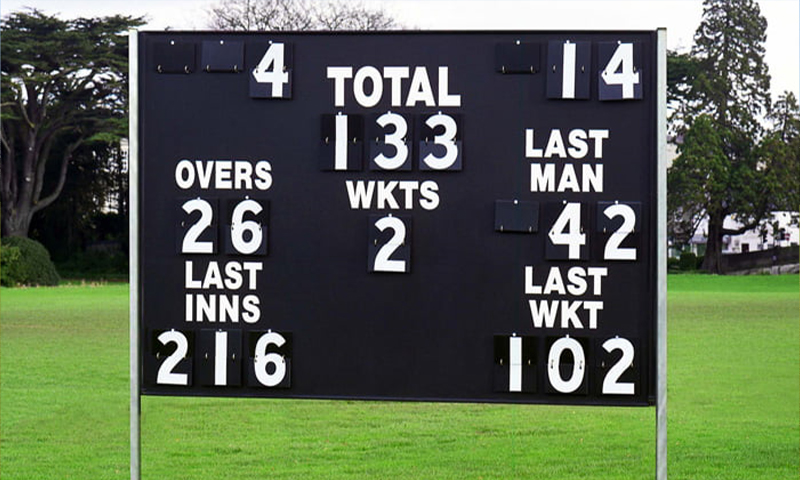
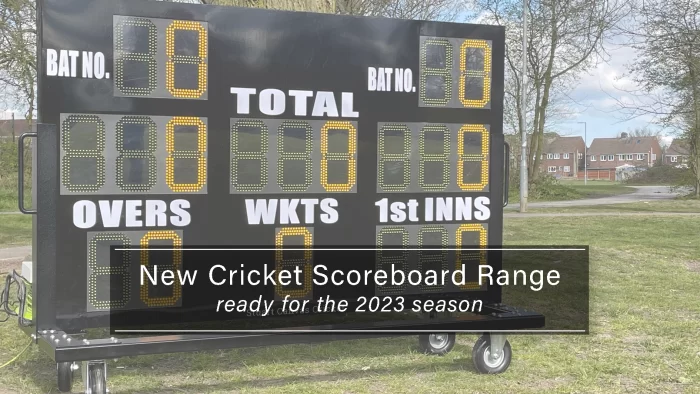
Cricket scoreboard explained: if you’ve ever watched a cricket match, you’ll know how important the scoreboard is in keeping players and spectators engaged. From recording runs and wickets to tracking overs and extras, the scoreboard is the visual heartbeat of the game. But with so many options on the market, which one is right for your club, school, or professional ground?
In this guide, we’ll break down the essentials of a cricket scoreboard – explaining the different types, the features to look out for, and how to choose the best solution for your setup.
What Is It and Why Does It Matter?
At its core, a cricket scoreboard is a display system that communicates the live state of the match. Traditionally, this meant wooden panels with manually flipped numbers. Today, it can include sophisticated LED screens with wireless updates and even Duckworth-Lewis-Stern (DLS) integration for rain-affected games.
When we say cricket scoreboard explained, we’re talking about more than just numbers – it’s about understanding how the scoreboard enhances the flow of the game, helps umpires, informs players, and keeps the crowd invested.
When selecting a scoreboard, there are several elements to weigh up:
Match Level & Audience Size: Junior matches may only need a simple manual scoreboard, while league games often require clear LED displays.
Visibility: Larger crowds or floodlit games demand electronic boards with high contrast.
Scope of Information: Decide whether you only need runs/wickets/overs or advanced data like batsmen’s scores and required run rates.
Portability: Schools and smaller clubs often prefer lightweight, wheeled scoreboards.
Maintenance: Traditional scoreboards require little upkeep, while electronic ones need occasional servicing. See our maintenance tips for practical advice.
Budget: Manual scoreboards are generally more affordable, while electronic scoreboards are a bigger investment but offer more functionality.
Comparison of Traditional vs Electronic
Factor
Traditional Scoreboard (Manual/Portascore)
Electronic Cricket Scoreboard
Display Style
Vinyl flip panels on wood/metal
LED display, visible day & night
Information Shown
Runs, wickets, overs
Advanced data (run rate, batsmen, partnership)
Mobility
Often portable on wheels
Portable or fixed, wireless control
Maintenance
Minimal, DIY friendly
Requires servicing for tech components
Cost
Lower upfront
Higher upfront + service costs
Ideal Use Case
School, amateur, or traditional clubs
Competitive clubs, leagues, professional venues
This table is a simple way to get a cricket scoreboard explained visually so you can weigh your options quickly.
Enhancing the Match-Day Experience
The right scoreboard does more than display scores – it adds to the atmosphere. A large, clear display helps:
Spectators follow every ball.
Players stay motivated and aware of match situations.
Officials reduce miscommunication with accurate, visible updates.
When it comes to cricket scoreboard’s, the key is to match the scoreboard to your level of play, audience, and budget.
Schools and amateur clubs will appreciate the simplicity of manual scoreboards.
Clubs with larger audiences benefit from LED displays for better visibility.
Professional venues often need full-featured electronic scoreboards with advanced data output.
Whatever your choice, a well-chosen cricket scoreboard enhances the game for players, officials, and spectators alike.
At Stuart Canvas, we’ve been supporting cricket at every level for over 50 years, and our team can help you select the perfect solution for your ground.